

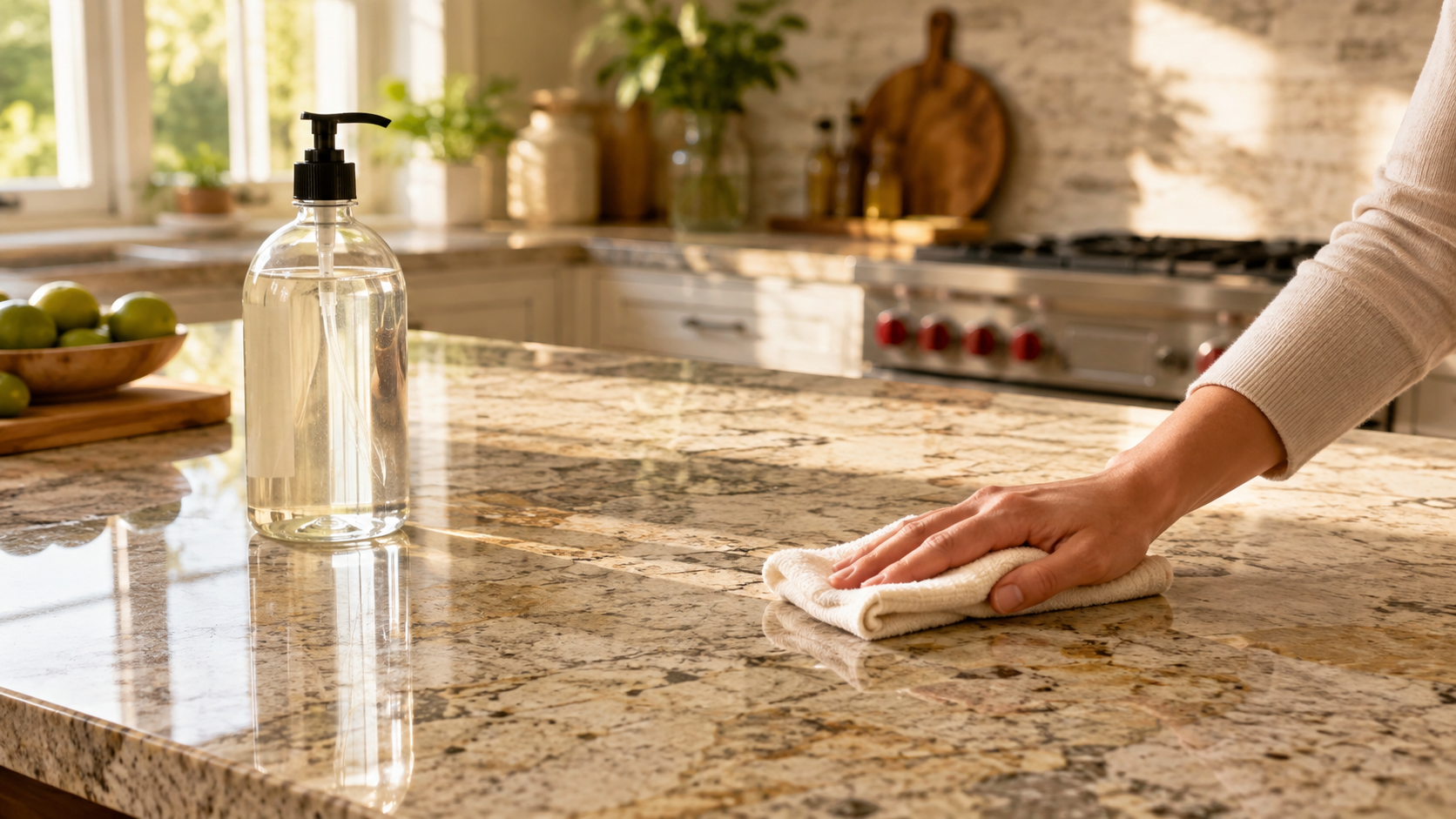
Natural stone countertops are one of the most enduring investments a homeowner can make in a kitchen, and with the right care, they hold their beauty for decades rather than years. But that care looks a little different in a Catskills home than it does in a full-time residence closer to the city. Seasonal humidity swings, freeze-thaw cycles, well water, and stretches of time when the house sits unoccupied all shape how stone should be maintained through the year. At Dash Cabinetry, we help homeowners across Upstate New York choose and care for granite, marble, and quartzite countertops that are built to handle exactly this kind of seasonal living.
Whether your Catskills property is a full-time home, a weekend retreat, or somewhere in between, the fundamentals of good stone care stay the same — they simply need to be applied on a schedule that matches how the house is actually used. This guide walks through what makes stone care different in the Catskills, how to handle daily and weekly maintenance, and how to adjust your routine season by season so your countertops stay protected whether you're at the house every weekend or closing it up for a stretch of the winter.
Why Stone Care Looks Different in a Catskills Home
Natural stone is porous by nature, which means its care depends heavily on the environment surrounding it — and a Catskills home presents a genuinely different environment than a full-time residence closer to the city. Humidity swings dramatically between seasons here, from damp, heavy summers to dry winter air once the heating system kicks in, and that shift affects how sealants perform over time. A sealant that holds up beautifully through a humid August can behave differently once the house is heated through a cold, dry January.
Freeze-thaw cycles add another layer of consideration, particularly for homes that sit unoccupied for stretches during the colder months. Moisture that finds its way into hairline seams or unsealed edges can expand and contract as temperatures swing, gradually affecting the stone in ways that simply don't occur in a climate-controlled, full-time residence. This is one of the main reasons seasonal resealing matters more in a Catskills home than it might in a year-round city kitchen.
Water quality is a further factor many homeowners don't consider until it becomes a visible problem. Many Catskills properties rely on well water, which often carries a higher mineral content than municipal water systems. Left to evaporate on a stone surface repeatedly, mineral-rich water can leave behind a subtle etching or film over time, particularly on more sensitive stones like marble. None of this means natural stone is a poor choice for a Catskills home — quite the opposite, stone remains one of the most durable countertop materials available — but it does mean the maintenance routine benefits from a few adjustments specific to this environment.
When we work with clients on new stone installations for Catskills homes, we often steer the conversation toward finish and sealant quality just as much as the stone itself. Slabs sourced through suppliers like Atlantic Stone go through consistent quality control, but the sealant applied at installation, and how consistently it's refreshed afterward, ultimately determines how well any stone performs through years of seasonal use. A high-quality installation paired with a realistic seasonal care routine is what allows natural stone to thrive in a home that isn't occupied every single day of the year.
Daily and Weekly Care for Natural Stone
The good news is that day-to-day stone care is straightforward, regardless of where the home is located. A consistent, simple routine does most of the work of protecting a stone countertop over its lifetime.
Wipe up spills promptly, particularly anything acidic like citrus juice, wine, or vinegar-based dressings. Even a well-sealed stone surface benefits from prompt cleanup, since prolonged contact with acidic liquids is one of the most common causes of visible etching on marble and, to a lesser degree, granite.
Use a pH-neutral stone cleaner for regular wiping, rather than general-purpose kitchen sprays. Many everyday household cleaners contain acidic or abrasive ingredients that gradually wear down a sealant, even when the damage isn't immediately visible. A dedicated stone cleaner, used a few times a week, is a small habit that meaningfully extends a sealant's effective life.
Always use trivets, cutting boards, and coasters. Natural stone is heat-resistant compared to many countertop materials, but placing hot cookware directly on the surface, or cutting directly into it, still risks dulling the finish or leaving marks over time. This habit matters especially in a home used seasonally, where the countertop needs to look its best during the limited weeks a family gathers there.
Blot, don't wipe, standing water. For porous stones in particular, a quick blot with a soft cloth prevents water from sitting long enough to seep toward the sealant layer, which matters more in a humid Catskills summer than it might elsewhere.
Keep a soft microfiber cloth on hand rather than an abrasive sponge. Scouring pads and abrasive sponges can gradually dull a polished stone finish, even when the surface seems durable. A soft cloth, paired with a stone-safe cleaner, is gentle enough for daily use without compromising the finish over time.
Seasonal Maintenance for a Catskills Home
Because a Catskills property often shifts between heavy weekend use, full seasonal occupancy, and stretches of being closed up entirely, stone care benefits from a seasonal rhythm rather than a single year-round routine.
Spring is the ideal time to check and refresh sealant, particularly after a winter that may have included freeze-thaw cycles or a closed, unheated house. A simple water-bead test — placing a few drops of water on the surface and watching whether they bead or begin to absorb — tells you quickly whether it's time to reseal before the busy summer season begins.
Summer, with its higher humidity and heavier day-to-day kitchen use, is when the daily and weekly habits above matter most. This is also a good season to address any hard water spotting that built up over the winter, since well water mineral deposits tend to become more visible once a stone countertop sees frequent use again.
Fall is worth a maintenance check before closing the house up for any extended period, or before the heating system runs consistently through the winter. Confirming that seals are intact and edges are free of any hairline cracks helps protect the stone once temperatures start swinging below freezing.
Winter, particularly for homes that sit unoccupied for stretches, benefits from maintaining consistent indoor temperature if possible, since dramatic swings between a cold, empty house and periodic heating are harder on both the stone and its sealant than steady, moderate conditions. If the home will be closed for an extended period, a final wipe-down and dry surface before leaving reduces the risk of any residual moisture causing problems in your absence.
Caring for Different Stone Types
Not all natural stone behaves the same way, and understanding your specific countertop material makes seasonal care considerably more effective.
Granite
Granite is among the most forgiving natural stones, highly resistant to scratching, heat, and everyday wear. It typically needs resealing only once every one to two years, even in a seasonal Catskills home, making it a dependable choice for homeowners who want the beauty of natural stone without a demanding maintenance schedule.
Marble
Marble is more porous and more reactive to acidic substances than granite, which means it benefits from more frequent sealing checks, particularly in a home exposed to seasonal humidity swings. Many Catskills homeowners choose marble specifically for its timeless veining and are willing to embrace the slightly more attentive care it requires, especially with prompt spill cleanup and a stone-specific cleaner used consistently.
Quartzite
Quartzite offers much of marble's aesthetic appeal with considerably better durability and stain resistance, which has made it an increasingly popular choice for exactly the kind of seasonal, lower-maintenance living that defines many Catskills homes. It still benefits from periodic resealing, but generally on a schedule closer to granite than to marble.
Soapstone
Soapstone behaves differently from the other stones covered here — it's naturally non-porous, so it doesn't require sealing in the traditional sense, and it develops a soft patina over time that many homeowners find appealing rather than problematic. It does benefit from periodic mineral oil applications to maintain that even patina, a simple habit that fits naturally into a seasonal Catskills routine, especially when applied during a spring or fall maintenance check.
Frequently Asked Questions About Stone Countertop Care
How often should I reseal my countertops? This depends on the stone type and how the sealant performs over time, but a simple water-bead test each spring is the most reliable way to know. If water no longer beads on the surface and instead begins to absorb within a minute or two, it's time to reseal.
Can I use vinegar or lemon-based cleaners on stone? We recommend avoiding acidic cleaners like vinegar or lemon-based sprays on natural stone, particularly marble, since repeated exposure can gradually etch the surface. A pH-neutral, stone-specific cleaner is a better long-term choice.
Is natural stone a good choice for a home that isn't occupied year-round? Yes, with the right sealing schedule and a few seasonal habits. Granite and quartzite in particular hold up exceptionally well in seasonal Catskills homes, and even more porous stones like marble perform well with the seasonal maintenance rhythm outlined above.
Will well water leave permanent marks on my countertops? Not if it's addressed regularly. Hard water spots from well water are typically a surface-level mineral buildup rather than permanent damage, and they respond well to a stone-safe cleaner and, if needed, an occasional deeper clean during your spring or fall maintenance check.
Should I do anything special before closing up the house for an extended period? A thorough wipe-down and dry surface before you leave is the most important step. If you know a sealant check is due, timing it for just before an extended closure, rather than just after, gives the stone the best possible protection during the time the home sits empty.
What should I do if I notice a stain or dull spot? Many surface-level stains and dull spots can be addressed with a poultice treatment or a professional resealing rather than requiring replacement. If you notice a change in your countertop's appearance, it's worth reaching out for guidance before the issue has a chance to set in further.
Protecting Your Catskills Kitchen for the Long Term
Natural stone countertops are built to last generations, and a Catskills home doesn't have to mean extra worry — it simply calls for a maintenance rhythm suited to seasonal living. With a consistent daily routine and a few seasonal check-ins timed around your home's actual use, granite, marble, quartzite, and soapstone all perform beautifully year after year, holding onto the character that made you choose natural stone in the first place.
Every stone type, and every home, has its own ideal care schedule, shaped by how the space is used, the water source, and the surrounding climate. Getting that schedule right from the start is one of the simplest ways to protect a significant investment for decades to come.
If it's time to reseal your existing countertops, or you're planning a new stone installation for your Catskills kitchen, our team is happy to help, whether that means a quick maintenance question or a full material selection for a new project. Get in touch or visit our Monsey showroom to talk through the right stone, finish, and care plan for your home.