

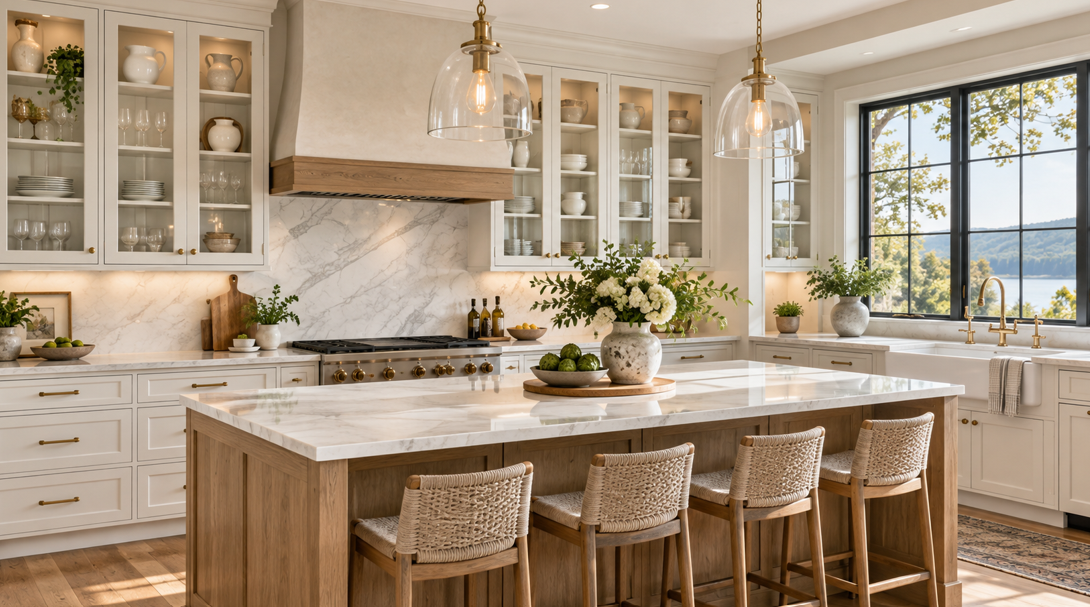
Some kitchen features disappear for a decade and return looking completely different. Glass-front cabinet doors have taken another path. They have remained a classic detail, quietly evolving as kitchen styles change — and in 2026, designers are finding fresh ways to use them in sophisticated, highly functional spaces.
For Rockland County homeowners, the renewed appeal makes sense. Today's glass-front cabinetry feels lighter and more architectural than the display cabinets of previous generations. Rather than covering every upper cabinet in glass, designers are using carefully positioned transparent doors to create visual breathing room, highlight beautiful tableware and add another layer of character to the kitchen.
At Dash Cabinetry, we approach details like glass cabinet doors as part of the complete kitchen composition. The right placement, frame style, glass treatment, lighting and interior finish can transform an ordinary storage cabinet into a feature that feels purposeful, refined and personal.
Why Glass-Front Cabinet Doors Are Trending Again in 2026
The return of glass-front cabinetry is part of a broader movement towards kitchens that feel warmer, more individual and less visually heavy.
Kitchen renovations continue to prioritise generous storage, but homeowners do not necessarily want every wall covered by an uninterrupted block of solid doors. Glass gives designers a way to retain enclosed storage while visually breaking up long cabinet runs.
That distinction is important.
Open shelving creates a completely exposed display. A glass-front cabinet provides many of the same visual benefits while protecting dishes and decorative pieces behind a door. The result can feel lighter than traditional closed cabinetry without sacrificing the finished, organised appearance many homeowners prefer.
Current design trends also favour greater personalisation. Instead of treating every cabinet identically, kitchens increasingly combine materials, finishes and storage styles. A run of painted cabinetry might include two glass-front doors. A natural wood kitchen may feature a glass cabinet with a contrasting interior. A tall pantry wall might incorporate an illuminated display section.
Glass also complements the movement towards timeless kitchen design. It can work within traditional, transitional, contemporary and organic interiors because its character depends heavily on the surrounding cabinetry.
That versatility explains much of its staying power.
Glass-front cabinets are less a passing style than a design tool — one that can make cabinetry feel lighter, more layered and more personal.
For Rockland County homeowners investing in a kitchen they expect to enjoy for many years, that balance between current style and enduring appeal is particularly valuable.
Where Glass-Front Cabinets Work Best
One of the biggest changes in contemporary glass-front cabinetry is placement.
Covering an entire kitchen in transparent doors can create visual clutter and require everything inside to remain presentation-ready. Today's more restrained approach uses glass where it adds something meaningful to the design.
At the End of a Cabinet Run
A pair of glass-front cabinets at the end of a long wall can create an elegant finishing point. This placement prevents a substantial run of cabinetry from feeling overly solid while giving special serving pieces or glassware a dedicated home.
It is especially effective when the cabinet interiors coordinate with the room's overall palette.
Beside a Range Hood
Symmetrical glass-front cabinets on either side of a statement hood can establish balance and help frame the cooking zone.
The transparency introduces contrast against solid doors and can soften the mass of tall or full-height cabinetry elsewhere in the room.
For a transitional Rockland County kitchen, this can be a particularly refined combination: classic proportions, contemporary hardware and a restrained amount of glass.
In a Beverage or Coffee Station
Dedicated beverage areas continue to play a larger role in kitchen planning. Glass cabinetry works naturally here because attractive cups, glassware and serving pieces can become part of the visual composition.
Adding interior lighting can make the zone feel especially polished in the evening.
Above a Countertop Cabinet
A glass-front display cabinet extending towards the ceiling can introduce height and architectural interest. It works beautifully in kitchens with generous ceilings, particularly when the upper section is reserved for decorative or less frequently used pieces.
In a Butler's Pantry
A pantry or secondary preparation area offers another excellent opportunity for glass.
The main kitchen can remain visually calm while the pantry introduces additional character through display cabinetry, richer interior finishes or decorative glass.
The strongest designs rarely use glass simply because space is available. Placement is intentional, and every transparent section contributes to the overall rhythm of the room.
Clear, Reeded or Frosted Glass? Choosing the Right Look
Not all glass-front cabinets create the same effect.
The type of glass dramatically changes how much the cabinet reveals, how formal it feels and how easily it integrates into daily life.
Clear Glass
Clear glass provides maximum visibility and is ideal when the contents deserve to be seen.
Beautiful dinnerware, carefully arranged glassware, cookbooks or serving pieces can become part of the kitchen design. Clear glass also gives a cabinet greater apparent depth because the eye travels into the interior rather than stopping at the door.
The trade-off is simple: what sits behind clear glass remains visible.
For that reason, clear fronts work particularly well for homeowners who enjoy maintaining curated displays or who want selected cabinets dedicated to attractive pieces rather than everyday pantry storage.
Reeded or Fluted Glass
Reeded glass introduces texture while partially obscuring cabinet contents.
Its vertical pattern can feel especially sophisticated in contemporary and transitional kitchens, offering a stronger decorative statement than clear glass without fully exposing everything inside.
It also interacts beautifully with light. When interior cabinet lighting passes through textured glass, the glow becomes softer and more atmospheric.
Frosted or Etched Glass
Frosted glass provides greater privacy while still breaking up the visual weight of solid cabinetry.
This makes it an excellent option when homeowners appreciate the lighter appearance of glass but prefer not to display the precise contents of every shelf.
Depending on the frame and surrounding finishes, frosted glass can lean either contemporary or quietly traditional.
Seeded and Decorative Glass
Seeded, antique-inspired and other decorative glass options bring stronger personality.
They can be particularly appropriate in homes where the kitchen draws from traditional architecture, European influences or farmhouse detailing. Used selectively, decorative glass makes cabinetry feel crafted rather than mass-produced.
The key is restraint. When the glass itself contains noticeable texture or pattern, surrounding elements generally benefit from remaining quieter.
The Cabinet Door Style Matters as Much as the Glass
Glass does not exist independently from the cabinet door around it.
A slim-framed glass door creates a very different impression from a detailed traditional frame. Selecting the right combination is essential if the kitchen is to feel cohesive.
Shaker-style glass doors remain especially versatile. Their familiar proportions work comfortably in transitional kitchens and coordinate naturally with solid Shaker cabinetry elsewhere in the room.
For contemporary spaces, narrower rails and stiles can give glass fronts a cleaner, more architectural character. Pairing them with slab cabinetry can provide just enough variation to prevent a minimalist kitchen from feeling flat.
Traditional kitchens may accommodate more detailed framing, mullions or decorative inserts, particularly when the architecture of the home supports them.
Colour matters too.
Dark cabinetry with glass fronts can feel striking and sophisticated, especially when the cabinet interior is illuminated. Black, deep blue or forest green frames can turn a simple display cabinet into a focal point.
Warm whites and creams create a softer effect, while natural woods add depth through visible grain.
When choosing kitchen cabinets, it is worth viewing the glass option alongside the solid door style rather than selecting it independently. Door proportions, finish, hardware and interior treatment all need to work as one composition.
Interior Cabinet Lighting Changes Everything
A glass-front cabinet during the day is attractive.
A beautifully illuminated glass cabinet after sunset can become one of the most memorable details in the kitchen.
Interior lighting has therefore become an important partner to glass-front cabinetry. Current kitchen design increasingly treats lighting as both functional infrastructure and an atmospheric element rather than a final decorative addition.
Integrated LEDs can illuminate shelves without introducing a visible bulky fixture. Depending on the cabinet design, lighting can run vertically, sit discreetly above shelves or create an even glow throughout the interior.
Colour temperature matters.
Warm lighting typically complements wood cabinetry, brass details and creamy stone surfaces, while excessively cool light can alter the appearance of cabinetry finishes and displayed pieces.
Shelf material also affects the result. Glass shelves allow illumination to travel farther through the cabinet, while wood shelves create stronger pools of light and shadow.
When glass-front cabinetry is intended as a feature, integrated lighting is one of the most effective ways to elevate it.
For homeowners who entertain frequently, illuminated display cabinets can also transform the atmosphere of the kitchen in the evening. Instead of relying entirely on bright ceiling lights, a combination of decorative fixtures, under-cabinet lighting and softly illuminated glass cabinets can make the room feel more inviting.
What Belongs Behind Glass Cabinet Doors?
The question homeowners often ask after choosing glass cabinetry is surprisingly practical: what do we put inside it?
The answer depends on whether the cabinet is intended primarily for display, everyday use or a combination of both.
Good candidates include:
Coordinated dinnerware
Glassware and stemware
Serving bowls and platters
Attractive mugs or teacups
Decorative ceramics
Cookbooks
Cake stands
Meaningful family pieces
Beautifully arranged pantry jars
Special-occasion tableware
The contents do not need to look like a showroom display. A lived-in kitchen can still feel refined.
What matters is visual consistency.
Grouping similar items tends to work better than filling a glass cabinet with unrelated objects. Repetition of colour, shape or material makes the arrangement feel deliberate even when the pieces are used every day.
It is also useful to leave some visual space. Every shelf does not need to be completely filled.
For households that require substantial everyday storage, glass fronts are best balanced with generous solid cabinetry. Less attractive essentials, small appliances and bulk supplies can remain behind closed doors, while selected pieces become part of the kitchen's personality.
That balance creates a kitchen that looks beautiful without asking the homeowner to live around the design.
Glass-Front Cabinets Pair Beautifully With Today's Natural Materials
The renewed interest in glass cabinetry is happening alongside another major 2026 direction: natural materials.
Wood grain is increasingly prominent in kitchen design, and glass provides an elegant contrast to the visual solidity of wood cabinetry.
Consider a white oak kitchen with two illuminated glass-front cabinets. The transparency breaks the repetition of the grain while retaining the warmth of the timber frame.
In a painted kitchen, glass can reveal a natural wood interior, creating depth and a subtle material contrast.
Stone can add another layer. Quartzite or dramatically veined countertops paired with restrained glass cabinetry create interest without forcing every surface to compete for attention.
Hardware then acts as the finishing detail.
Aged brass can bring warmth to cream or natural wood cabinetry. Polished nickel can give glass doors a more tailored character. Dark hardware against light cabinetry can create a sharper, architectural effect.
The most successful combinations are edited rather than excessive.
When cabinetry, glass, countertops, lighting and hardware each have their own visual identity, the designer's role is to determine which elements lead and which quietly support them.
Are Glass-Front Cabinets Practical for Busy Kitchens?
Yes — when they are placed thoughtfully.
Glass-front doors provide enclosed storage, so dishes are protected in a way they would not be on open shelving. They also make frequently used pieces easy to locate.
Maintenance is straightforward, although fingerprints and marks can be more visible on glass than on some solid finishes. Placement can help minimise this. Upper display cabinets generally receive less direct handling than lower cabinetry, making them a particularly practical application.
Families concerned about keeping every cabinet perfectly styled can also select textured or frosted glass rather than completely transparent panes.
Another option is to limit clear glass to one or two dedicated display zones.
This is why personalised kitchen planning matters. A feature that works beautifully for one household may need a different interpretation for another.
The best design takes into account:
How frequently the cabinet will be opened
What will be stored inside
Whether children regularly use the area
The amount of natural light
The surrounding cabinetry
Desired maintenance level
Whether interior lighting is planned
How visible the cabinet is from adjoining rooms
Glass cabinetry works best when its aesthetic role and its everyday function are considered together.
Why the Look Suits Rockland County Kitchens
Rockland County contains a wide mix of homes and architectural styles, which gives glass-front cabinetry unusual versatility.
In a traditional property, divided-light glass doors can reinforce classic millwork and architectural detailing. In a renovated transitional kitchen, simplified glass panels can bridge traditional proportions with cleaner contemporary finishes.
Larger open-plan kitchens can use glass to soften extensive cabinetry walls, while smaller kitchens can benefit from the added sense of depth created by transparent doors.
The feature is also particularly useful in homes where the kitchen is visible from adjoining dining or living areas.
As kitchens become increasingly connected to the rest of the home, cabinetry has to function as furniture as well as storage. Carefully designed glass-front cabinets can help achieve that effect, displaying beautiful pieces while contributing texture, light and architectural interest.
For Rockland County homeowners who value both presentation and functionality, this is where the trend becomes especially relevant.
It is not about recreating an old-fashioned china cabinet.
It is about taking a timeless idea and using it with greater precision.
How to Know Whether Glass Cabinet Doors Are Right for Your Kitchen
Glass fronts are worth considering when you want to lighten a substantial cabinet layout, create a display feature or introduce variation without changing the cabinetry colour.
They are particularly effective when:
You own attractive dishes or glassware you enjoy seeing.
A long wall of cabinetry needs visual relief.
You want an illuminated feature for evening ambience.
Your kitchen combines traditional and contemporary influences.
You prefer enclosed storage but like the openness of display shelving.
You want selected cabinetry to feel more furniture-like.
Your kitchen is visible from adjacent entertaining spaces.
Solid doors remain the more practical option for areas holding highly varied pantry items, small appliances or everyday supplies that homeowners prefer to keep visually quiet.
For many kitchens, the answer is therefore not glass or solid cabinetry.
It is an intentional combination of both.
Give a Timeless Cabinet Detail a Fresh Perspective
The return of glass-front cabinetry demonstrates why some design elements never truly disappear. Their expression simply changes.
Today's versions are cleaner, more selective and more personalised. Clear glass can showcase meaningful pieces. Reeded or frosted glass provides texture and discretion. Interior lighting turns cabinetry into an atmospheric feature, while thoughtful placement keeps the room functional and visually balanced.
For a Rockland County kitchen, glass-front doors can be especially effective at connecting timeless cabinetry with the warmer, more individual design direction shaping kitchens in 2026.
Dash Cabinetry helps homeowners bring these details together through personalised kitchen design, 3D renditions, cabinet selection and professional installation. From deciding where glass belongs to coordinating door styles, finishes, countertops, lighting and hardware, every element can be considered before the final kitchen takes shape.
If you are planning a kitchen renovation in Rockland County or the surrounding tri-state area, schedule a consultation to explore how glass-front cabinetry can become an elegant and functional part of your design.

